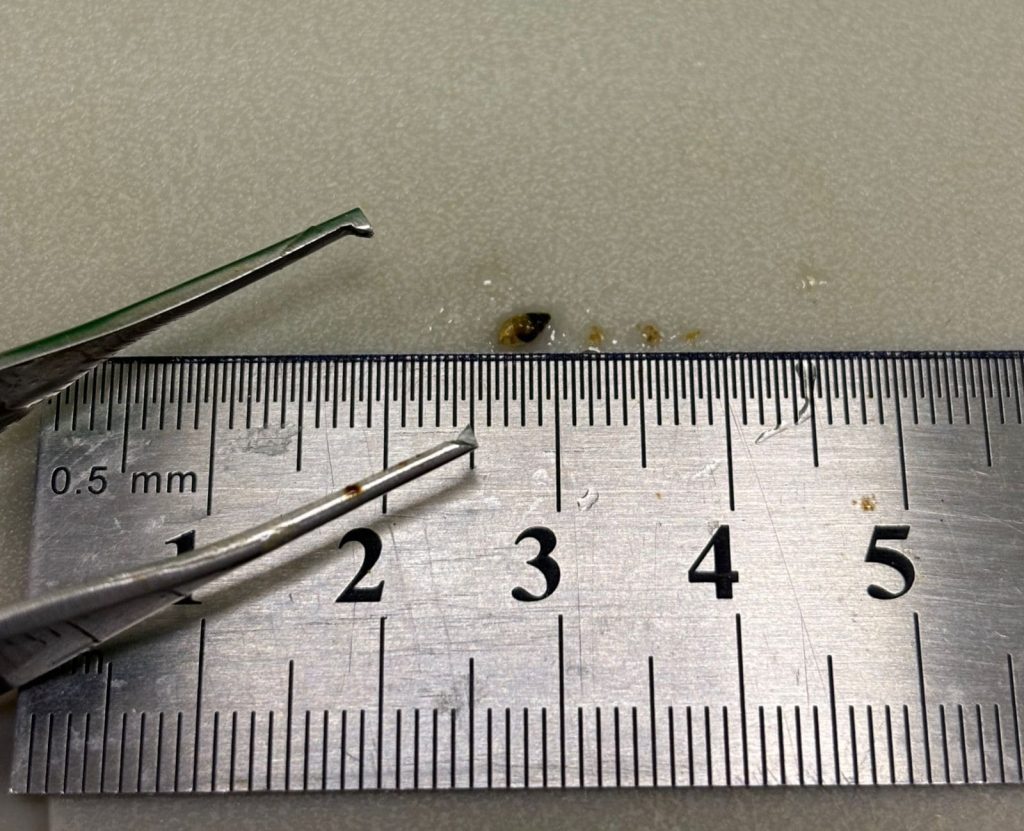

Fasciola hepatica is a parasite that damages the liver of animals and people.
This Fondecyt project is the first to study one of the parasite’s proteins, prominin, to understand how it causes liver damage and pave the way for new tools to diagnose, treat and prevent fasciolosis.
A liver parasite
Fasciolosis is a parasitic disease caused by Fasciola hepatica, commonly known as the liver fluke. It mainly affects livestock such as cattle and sheep, but it can also infect humans. The parasite settles in the liver, where it causes tissue damage and fibrosis during infection.
A problem for livestock farming
Besides its impact on health, fasciolosis causes major economic losses. Infected animals are less productive, and at slaughterhouses many livers must be condemned because they are unfit for consumption. That’s why understanding how the parasite works is key for both animal health and the livestock sector.
A protein yet to be explored
Prominin is a protein that has not yet been studied in Fasciola hepatica. It has been linked to resistance mechanisms against triclabendazole, one of the main drugs used to control this infection. Understanding its role in the parasite’s biology could help explain how it causes damage and how it manages to resist treatment.
What we study
Over three years, the team will characterize where and how much prominin is expressed in the parasite, and assess whether it is present in the liver tissue of infected cattle. It will also analyze whether this protein is linked to the damage and fibrosis that occur in the liver during infection.
What we hope to achieve
We expect to generate new knowledge on how F. hepatica damages the liver, describing for the first time the presence of prominin in the parasite and in its hosts’ tissue. In the future, these results could help identify new biomarkers of infection and targets for developing diagnostic, therapeutic or preventive tools against fasciolosis.
Investigating the Role of Prominin in Fasciola hepatica Pathogenesis and Host Liver Damage