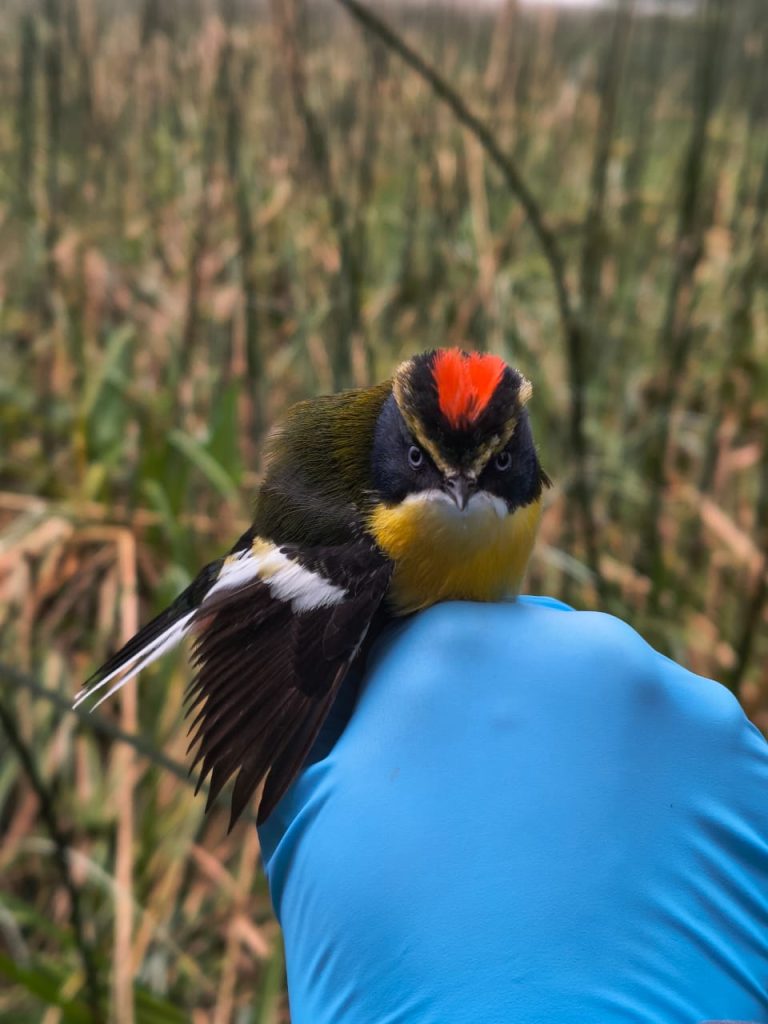

Songbirds could also play a role in spreading avian influenza.
This Fondecyt project studies whether Passeriformes living in the Río Cruces wetland become infected with the influenza A virus by sharing spaces with swans and gulls, the virus’s natural reservoirs.
A virus that changes
The influenza A virus can swap and combine genetic material, which increases its pandemic potential and makes it a public health concern. In Chile, outbreaks such as the H7N3 avian influenza outbreak in 2002 showed that wild birds can introduce the virus and transmit it to poultry.
The world’s most numerous birds
Passeriformes make up two-thirds of all bird species on the planet. Many live in wetlands alongside ducks, swans and gulls, which are natural reservoirs of the virus. Recent studies show that several species, including some in Chilean wetlands, can carry the virus and transmit it to other birds and mammals. Even so, they remain little studied.
The key question
The project proposes that habitat use influences infection in Passeriformes, especially in wetlands. It also suggests that the more they share spaces with natural reservoirs, the greater the transmission of the virus. To test this, Passeriformes from the wetland will be compared with those living in forest areas.
How we study it
Between July 2025 and June 2027, the team will work monthly in the Río Cruces wetland together with the Bird Ecology Lab at the Universidad Austral de Chile. Twelve black-necked swans and eight brown-hooded gulls will be fitted with GPS collars, and more than 700 Passeriformes will be captured each year for sampling.
What we hope to learn
The samples will make it possible to detect the virus, its subtypes and antibodies in the birds, and to compare its evolution with that of the viruses found in swans and gulls. This will show whether Passeriformes act as alternative reservoirs or as bridges connecting waterbirds with other birds and mammals, which is key to understanding how influenza A spreads.
Understanding the role of Passeriformes in the circulation of the influenza A virus