
Rivers reflect how our activities affect the environment. This Fondecyt project studies the Aconcagua Basin to find where antimicrobials, metals and resistant bacteria build up in water, sediments and wild birds, and how cities, farming and mining play a role.
What is antimicrobial resistance?
Antimicrobials, such as antibiotics, are key medicines for treating infections in people and animals. When bacteria become resistant, these treatments stop working. Resistance doesn’t only arise in hospitals or on farms: it can also develop and spread in the environment, for example in rivers that receive waste from different human activities.
A basin under pressure
The Aconcagua Basin is shaped by cities, farmland and mining operations. Each of these activities can release different contaminants into the river. Yet there is still little information on how antimicrobials and resistance are distributed in Chilean rivers, and how they change throughout the year.
Metals and resistant bacteria
Metals, common in mining areas, can also influence resistance. Some bacteria that resist metals are resistant to antimicrobials at the same time, a phenomenon known as co-selection. In addition, mobile genetic elements allow bacteria to share resistance genes with one another, helping resistance spread through the environment.
How we study it
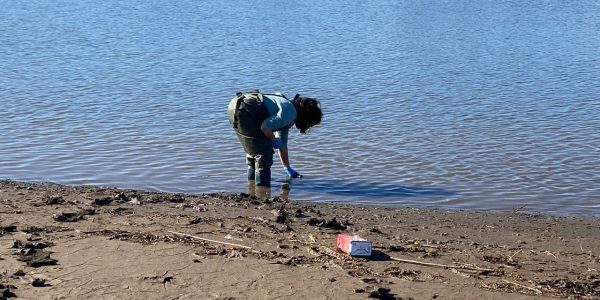
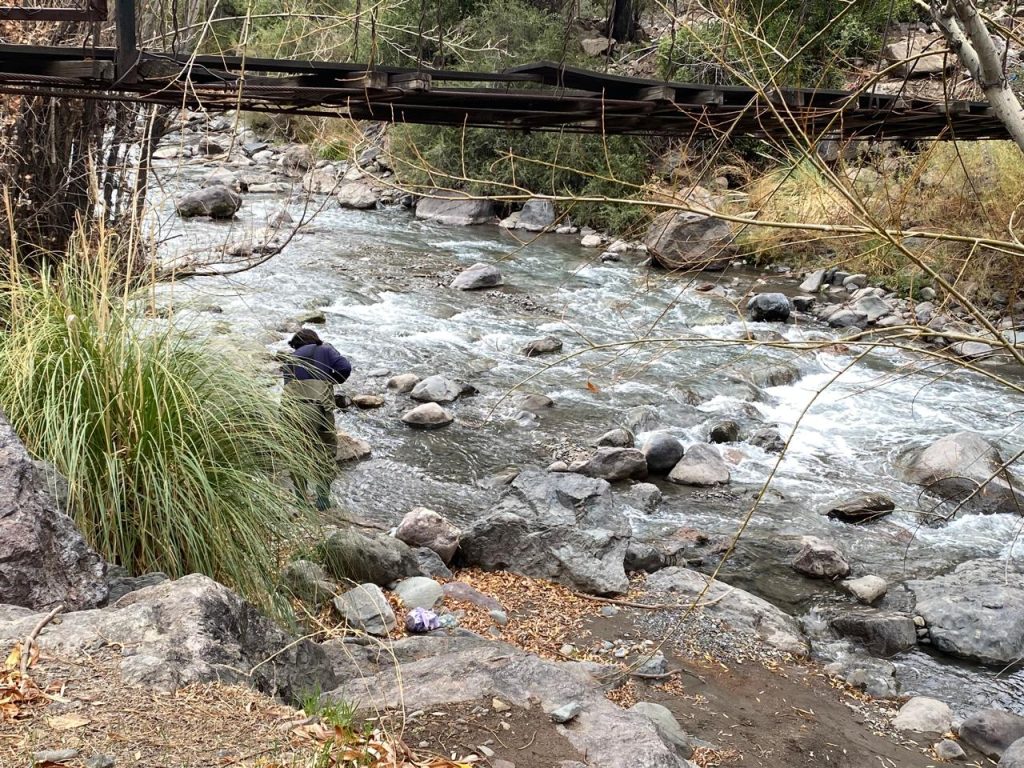
The team will collect samples of surface water, sediments and wild bird droppings at different points across the basin and in different seasons. These will be tested for antimicrobial and metal residues, screened for resistance genes using metagenomic tools, and used to analyze isolated bacteria. The results will be cross-referenced with land-use maps.
What we hope to achieve
We expect to identify the areas of the basin with the highest concentrations of antimicrobials, metals and resistant bacteria, and link them to their sources of human pressure. The project will produce a georeferenced database and maps of critical zones to guide monitoring and mitigation.
Spatiotemporal dynamics of antimicrobial resistance and chemical contaminants in the Aconcagua Basin: A multi-matrix assessment for environmental health